Real Dental Websites
A selection of websites we've designed and built for real dental practices across the US, from implant and cosmetic practices to family and emergency clinics. Every site below is live, and every practice named is a real client. Open any project to see what we delivered and why.
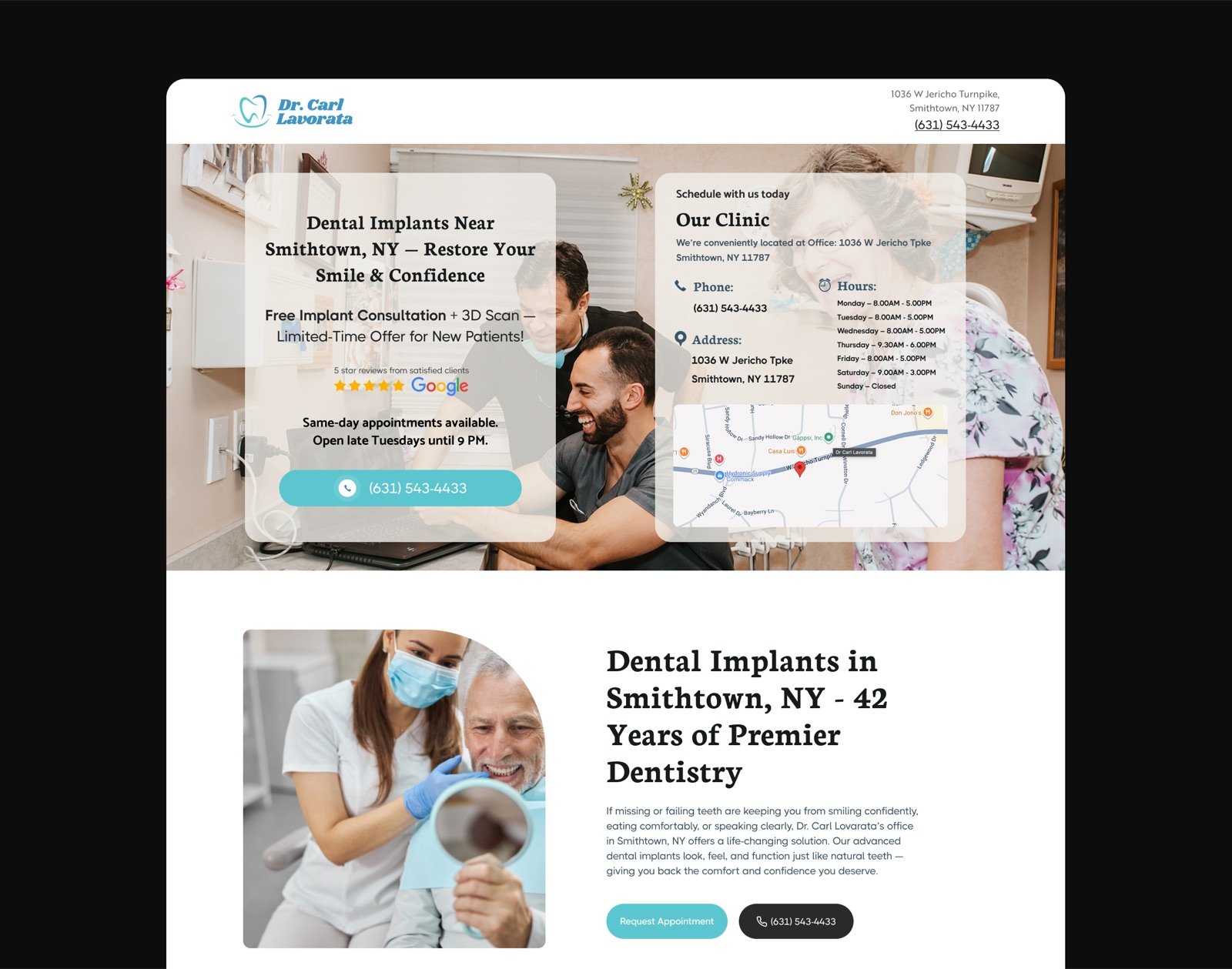
Dr. Carl Lavorata
A conversion-first implant website for an established Smithtown, NY practice.
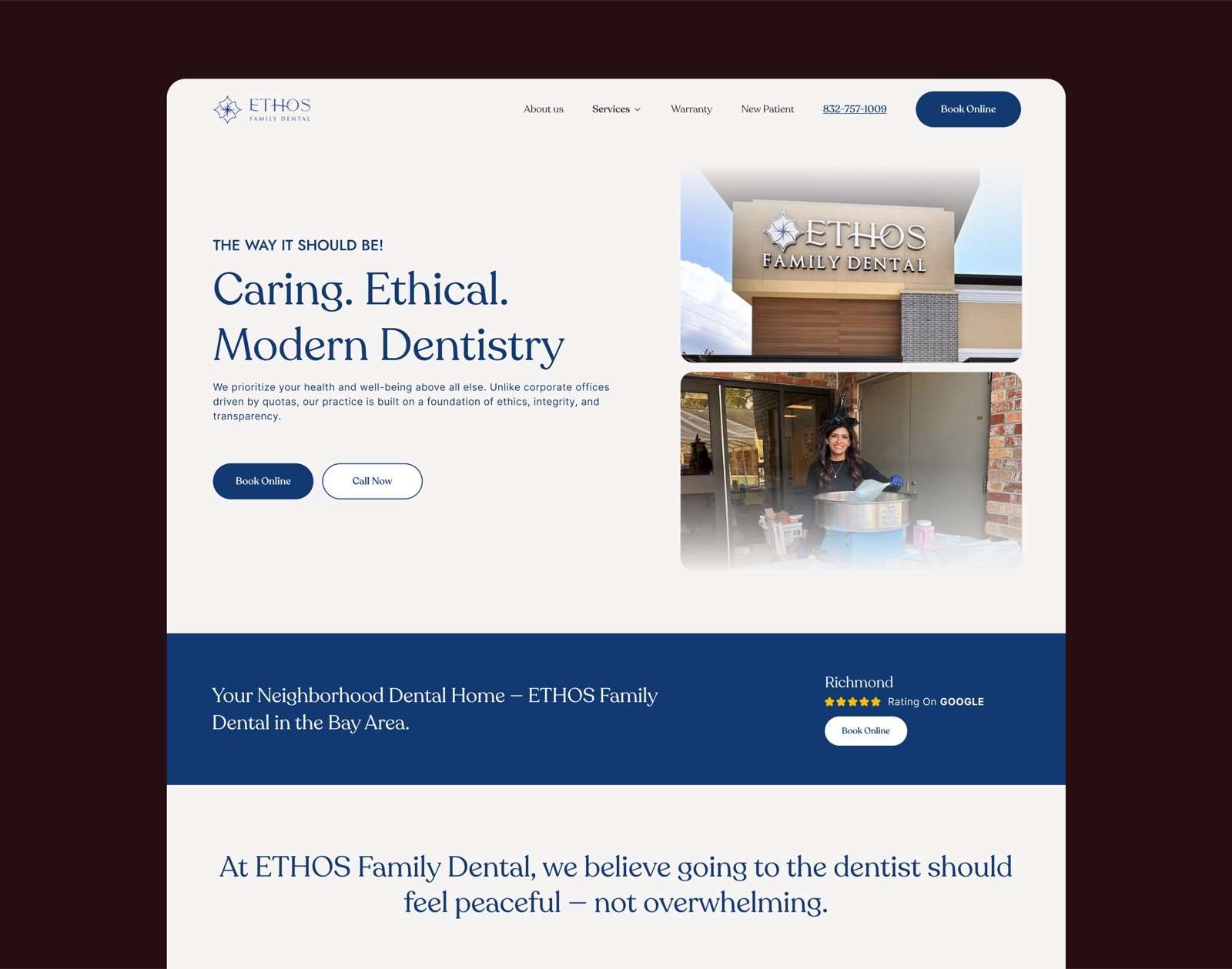
Ethos Family Dental
A calm, editorial brand website for a Bay Area family practice.
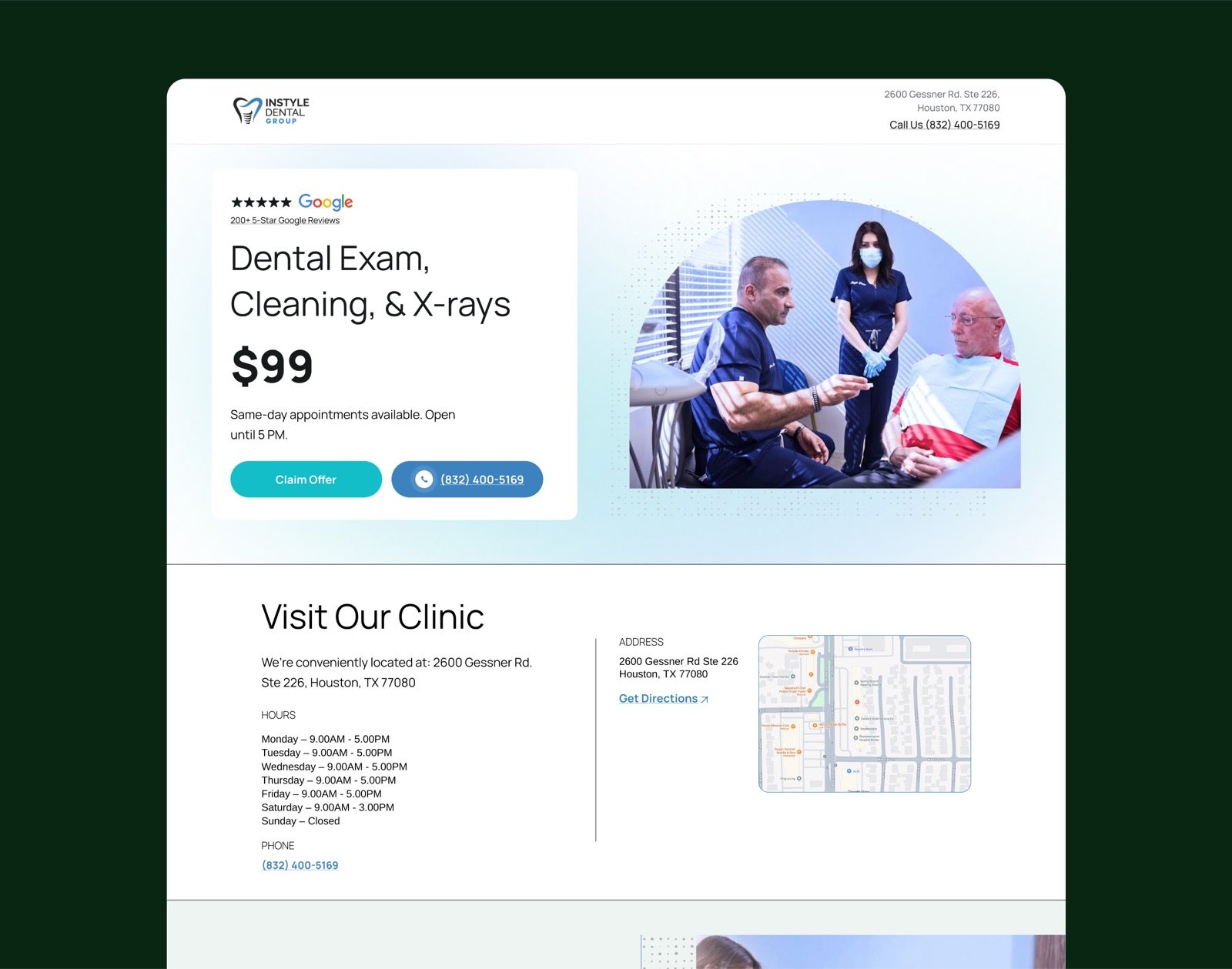
Instyle Dental Group
An offer-led new-patient site for a Houston general practice.
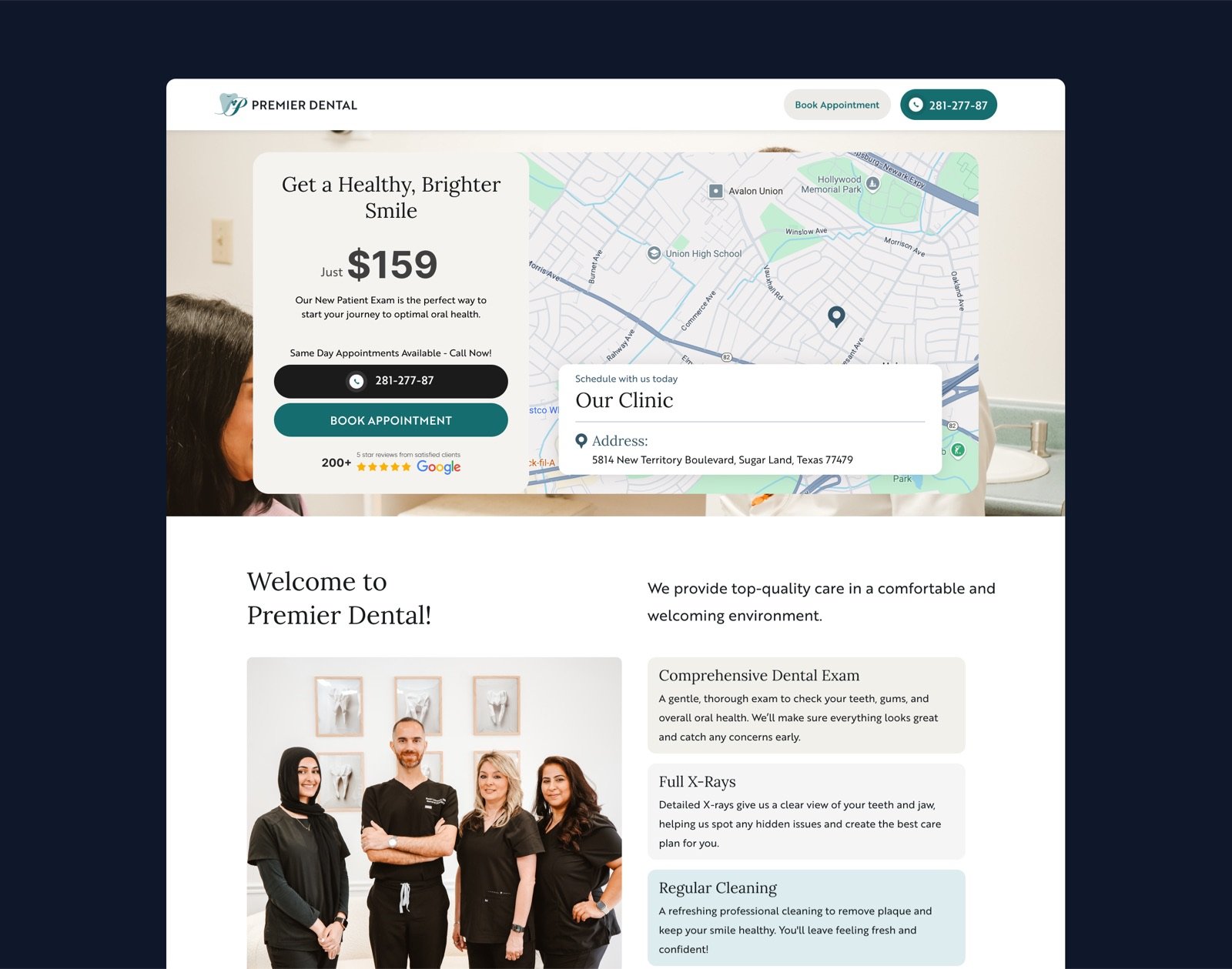
Premier Dental
A new-patient funnel website for a Sugar Land, TX practice.
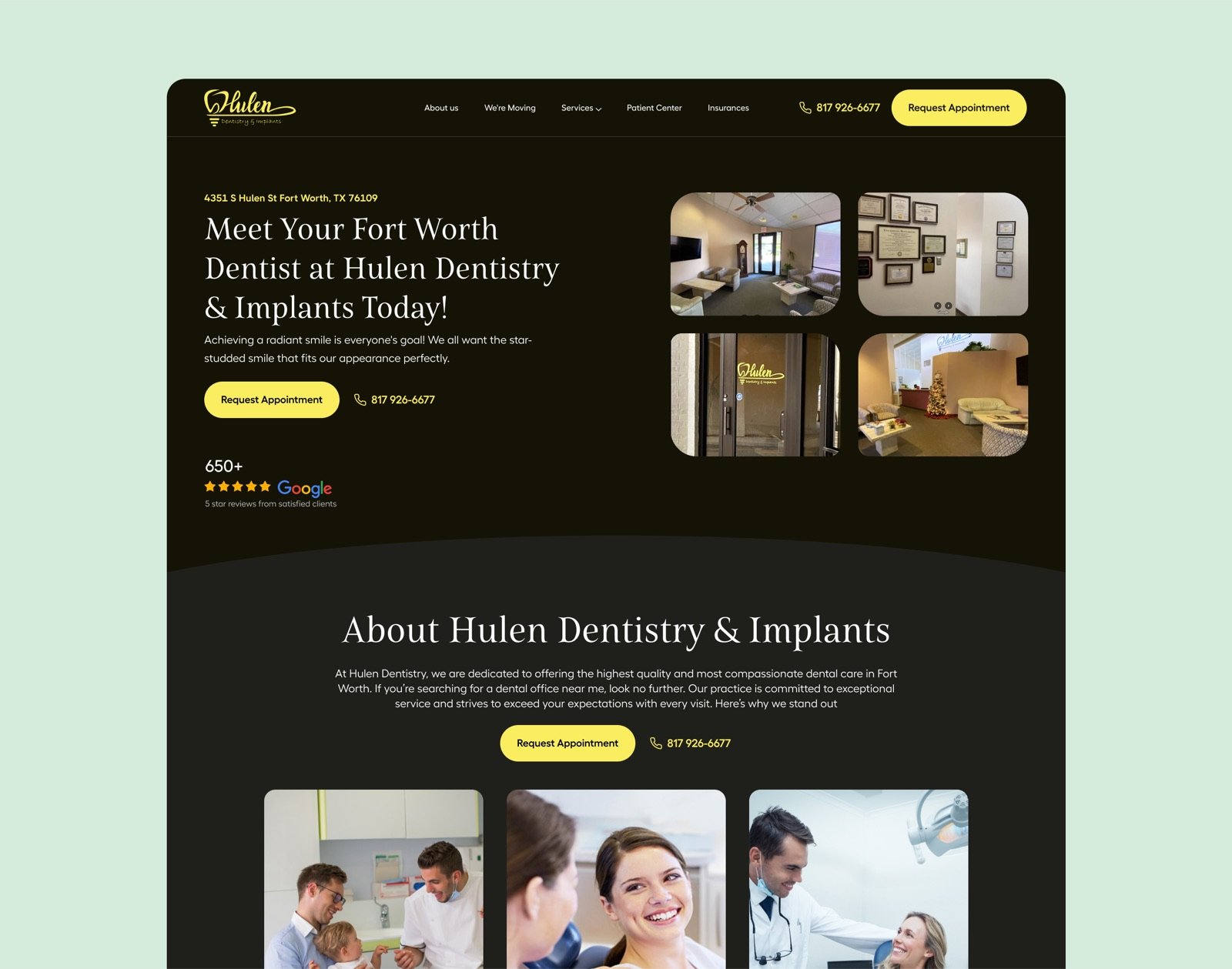
Hulen Dentistry & Implants
A dark, editorial website showcasing 650+ reviews in Fort Worth.
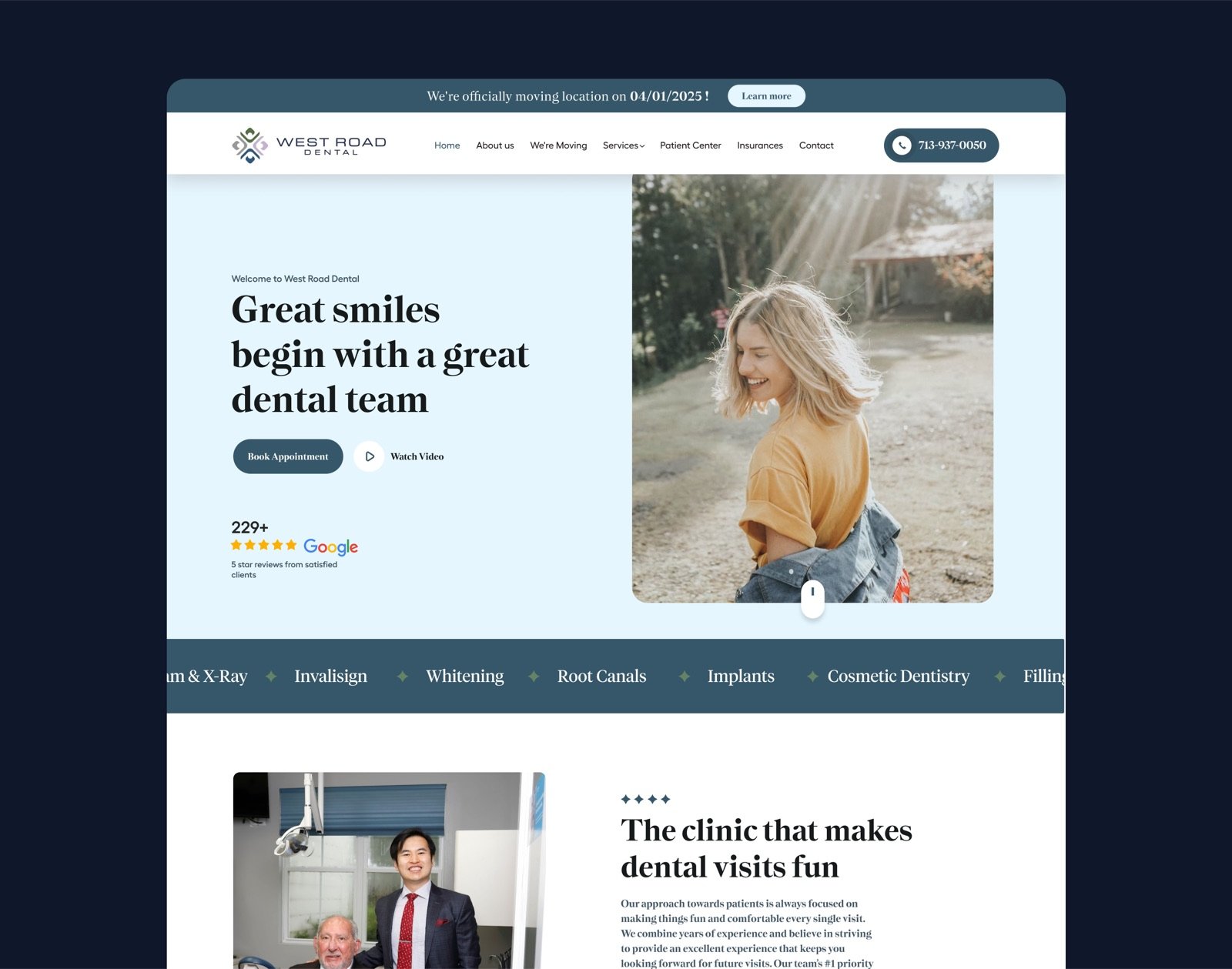
West Road Dental
A friendly, lifestyle-led brand website for a Houston practice.
What these builds have in common
The practices above run different treatments in different markets, so the sites do not look alike. The decisions underneath them are the same five every time.
A single obvious next step
Practices usually come to us with four competing calls to action on the homepage: book online, call us, request a quote, join our newsletter. Each build leads to one action instead, repeated everywhere it is genuinely useful and nowhere it is not.
Designed at phone width first
Most dental searches happen on a phone, often on a patchy connection and often in a hurry. These layouts are built for a small screen first and then widened, which is why they load quickly and why the phone number is never more than a thumb away.
Proof the practice actually owns
Real reviews, real photography of the real practice, real credentials. Nothing on these sites is licensed stock imagery standing in for a patient outcome, because patients comparing three local practices can tell the difference.
The treatment the practice wants more of, up front
An implant practice leads with implants. A family practice leads with a new-patient offer. A homepage is not a menu of everything a practice is capable of, it is an argument for the work it wants to be known for.
Local signals wired in
Embedded maps, consistent name and address details, and alignment with the Google Business Profile, so the website and the map results reinforce each other instead of quietly contradicting each other.
Why there are no performance numbers on this page
Most agency portfolios lead with a percentage. We do not publish lead volumes, cost per acquisition, or revenue figures against named practices, for two reasons.
The first is permission. Those numbers belong to the practice, not to us, and most practice owners would rather their local competitors did not have them.
The second is that a figure is close to meaningless without the context it usually gets stripped of: the market, the starting position, the monthly budget, the treatment mix, and how long the campaign actually ran. A 300 percent increase from a base of two enquiries a month is a very different claim from the same percentage at fifty, and a portfolio tile has no room to tell you which one you are looking at.
There is a third reason, and it is less flattering. Attribution in dental marketing is genuinely difficult. A practice that redesigns its website, cleans up its Google Business Profile, and starts asking patients for reviews in the same quarter cannot cleanly separate which of those produced the new patients, and anybody presenting one tidy figure has usually decided in advance which change to credit for it.
What you can verify on this page is the work itself. Every site is live, every practice named is real, and you are welcome to visit any of them. On a discovery call we will talk through what actually happened for practices in a position similar to yours, including the engagements that took longer than we expected them to and why.
How to read any agency portfolio, including this one
Three checks are worth running on any dental agency's work page before you take a call. They take about ten minutes and they will tell you more than the copy on the page.
First, open the sites. A surprising number of portfolio screenshots point at work that is no longer live, was never launched, or has since been replaced by something the practice built elsewhere. If the site loads and looks like the image, the work is real.
Second, load one of them on a phone on a mobile connection rather than office wifi. Most dental traffic arrives that way, and a build that only holds together on a desktop is a build that was never tested under the conditions that matter.
Third, check whether the practices named are the kind of practice you are. An agency whose portfolio is entirely single-location family practices is telling you something useful if you run a multi-site implant group, and the reverse is equally true. Relevant work beats impressive work.
Want results like these for your practice?
Tell us about your practice, or book a free discovery call, and let's talk about where you're losing patients to competitors.
Tell us about your practice
Grab a slot on the calendar for the fastest path to a booked call, or send a few details and we'll follow up personally.